
How paleoclimate records and construction projects can go hand in hand
Paleoclimate records are probably not the first thing that comes to mind for most of us when we think of water infrastructure. Before explaining how they are linked, first it’s important to understand what they are.
Paleoclimate records are clues from nature about the climate. They include tree rings, lake sediments and cave formations.
Now, how are they linked?
They help us understand the climate history of an area. This information can allow governments and local communities to predict climate change impacts and risks to water security.
Knowing these impacts and risks helps to identify what water infrastructure is needed in a region. This is why the Australian Government, through the National Water Grid Fund, is helping to fund the $1 million Climate Information and Guidance for Water Infrastructure Planning science project.
This project is expected to benefit regional and remote communities in Victoria through improved climate risk assessments used to guide water planning. It will also update assessments with paleoclimate records. This will help to provide safe and reliable water through targeted investment in water infrastructure.
Funding has also been provided for new water infrastructure upgrades as part of the Westernport Water Distribution Network Resilience construction project.
The current Westernport network is ageing, resulting in high pH levels and low chlorine levels. These water quality issues mean the network won’t be able to meet future demand, particularly during the tourism season.
This project includes a package of interconnected upgrades across 4 sites. This includes a new:
- pressure reduction and water quality monitoring station in the Grantville area
- 2 megalitre (ML) potable water storage tank in the Grantville / Corinella area
- 0.5 ML potable water storage tank in the Dalyston area
- water quality station on Phillip Island.
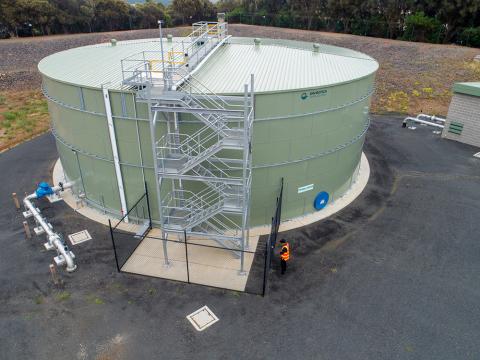
Image credit: Westernport Water
The Australian Government, through the National Water Grid Fund, is contributing $5 million towards this project.